

 Image 1 of 1
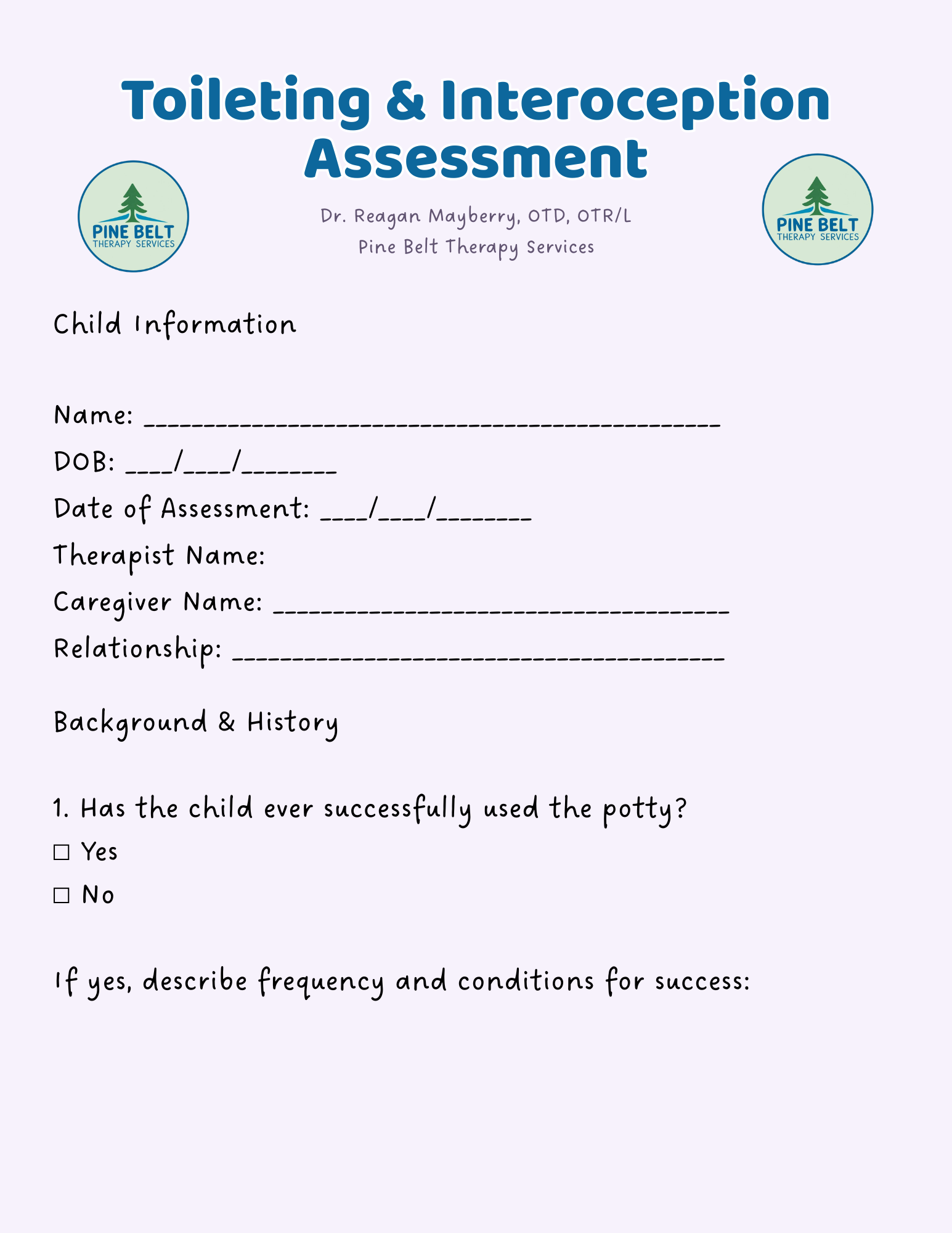
The Toileting & Interoception Assessment is a comprehensive clinical reasoning tool designed for occupational therapists working with pediatric clients experiencing toileting challenges. This structured caregiver interview and clinical observation form helps OTs move beyond surface-level toileting behaviors to identify underlying interoceptive, sensory, motor, and environmental factors impacting success.
Toileting difficulties are often multifactorial, and this assessment supports therapists in systematically evaluating a child’s awareness of internal body cues, interpretation of those cues, and ability to respond appropriately. It also examines bowel and bladder patterns, emotional responses to toileting, sensory processing considerations, and consistency of routines across environments.
With guided caregiver interview questions and an OT-focused summary section, this tool streamlines clinical reasoning and helps therapists identify meaningful intervention targets that support true toileting independence.
Pediatric toileting delays or regression
Sensory-based toileting challenges
Autism, ADHD, and neurodivergent populations
Children with anxiety or avoidance behaviors around toileting
Chronic withholding, accidents, or inconsistent toileting patterns
Interoceptive awareness and body signal recognition
Toileting readiness and functional participation patterns
Sensory and motor barriers to toileting success
Emotional and behavioral responses to toileting demands
Environmental and routine inconsistencies impacting progress
This assessment provides a structured, efficient way to gather clinically relevant information that informs intervention planning. It supports deeper insight into why toileting challenges are occurring—not just what is happening—so therapy can be more targeted, individualized, and effective.
The Toileting & Interoception Assessment is a comprehensive clinical reasoning tool designed for occupational therapists working with pediatric clients experiencing toileting challenges. This structured caregiver interview and clinical observation form helps OTs move beyond surface-level toileting behaviors to identify underlying interoceptive, sensory, motor, and environmental factors impacting success.
Toileting difficulties are often multifactorial, and this assessment supports therapists in systematically evaluating a child’s awareness of internal body cues, interpretation of those cues, and ability to respond appropriately. It also examines bowel and bladder patterns, emotional responses to toileting, sensory processing considerations, and consistency of routines across environments.
With guided caregiver interview questions and an OT-focused summary section, this tool streamlines clinical reasoning and helps therapists identify meaningful intervention targets that support true toileting independence.
Pediatric toileting delays or regression
Sensory-based toileting challenges
Autism, ADHD, and neurodivergent populations
Children with anxiety or avoidance behaviors around toileting
Chronic withholding, accidents, or inconsistent toileting patterns
Interoceptive awareness and body signal recognition
Toileting readiness and functional participation patterns
Sensory and motor barriers to toileting success
Emotional and behavioral responses to toileting demands
Environmental and routine inconsistencies impacting progress
This assessment provides a structured, efficient way to gather clinically relevant information that informs intervention planning. It supports deeper insight into why toileting challenges are occurring—not just what is happening—so therapy can be more targeted, individualized, and effective.